PE Food Cling Film: Choose a Format and Prepare a Bulk Enquiry PE
Compare household, foodservice and machine PE food cling film. Prepare a bulk enquiry with roll dimensions, intended food contact, sample criteria and packaging details.
Include your destination, quantity and intended use for a focused sourcing review.
Subcategories

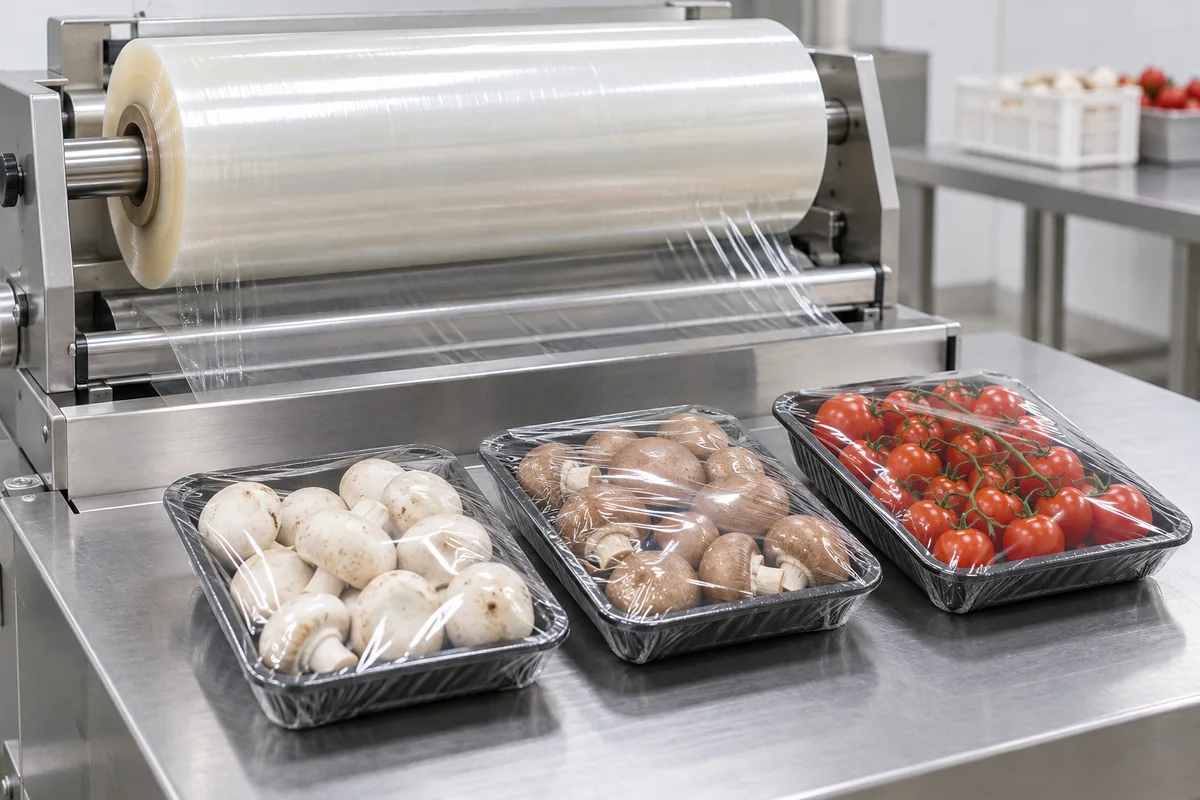

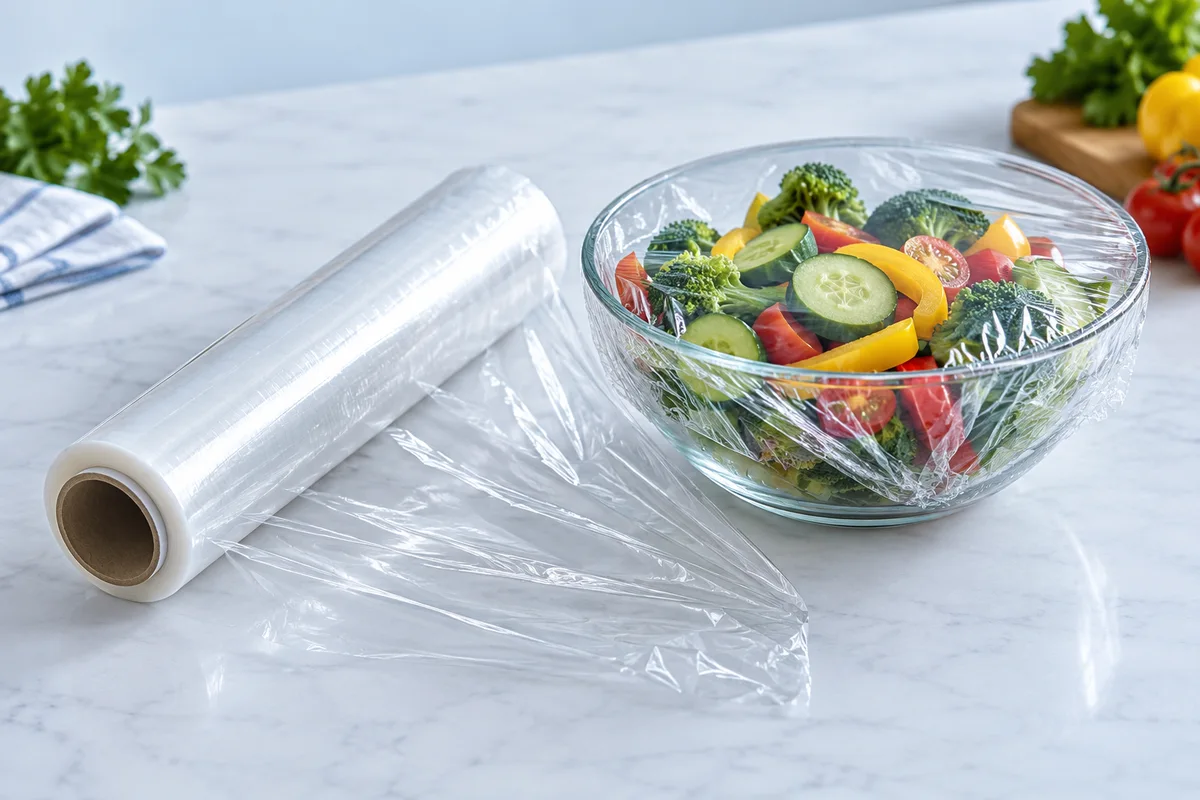
Food cling film is a purchasing category in which a familiar product name can hide very different requirements. A distributor buying boxed rolls, a caterer covering preparation containers and a food packer running a tray-wrapping machine do not need the same purchasing brief. This guide focuses on polyethylene, or PE, food cling film. It helps you identify the relevant format, describe the intended use and compare supplier responses on a consistent basis. Saderati facilitates enquiries and connections with relevant suppliers; the availability, specification and commercial terms of a particular film are established through the enquiry, rather than assumed from its category name.
Begin with the application, not the appearance of the film
A transparent roll is not a complete material specification. Ask for the polymer identification and the finished product reference. PE food cling film is distinct from PVC film and from cellulose-based cellophane, even where local trade names are used loosely. If PE is a purchasing requirement, write it explicitly instead of relying on a photograph or the words plastic wrap.
Polyethylene is also used in pallet stretch film. That application concerns load containment and does not establish suitability for direct food contact. Keep the food-use requirement attached to the exact product offered, including its instructions and supporting documentation.
Separate retail, foodservice and machine requirements
For retail rolls, assess the complete unit a customer takes home: film, core, carton, cutting arrangement and instructions. For foodservice, the relationship between the refill and the dispenser becomes important, together with the containers being covered and the pace of work. For machine tray wrapping, identify the equipment and the required finished-pack result before discussing a roll specification.
Jumbo rolls represent another buying situation: they are inputs for converting and rewinding. A quotation for finished consumer rolls is not an equivalent response. State whether you require a ready-to-use product or an input for your own conversion process at the beginning of the enquiry.
Turn the roll description into measurable information
List film width, nominal length, thickness and the agreed method for checking those dimensions separately. Distinguish net film weight from the weight of the complete roll and packaging. For equipment use, include core inside diameter, maximum roll outside diameter and unwind direction. A current sample can clarify the requirement, but it should accompany a written description rather than replace it.
Where a dimension remains undecided, describe the constraint that controls it. This might be the largest container, available dispenser space or machine holder. Invite a reasoned proposal, then record the accepted specification instead of allowing a tentative number to become an unexamined purchase requirement.
Describe the intended food contact precisely
The intended food, contact arrangement, storage time and temperature belong in the buying brief. FDA guidance distinguishes food types and use conditions when discussing food-contact substances. The practical lesson for a purchaser is to avoid an undefined request for food-safe film and give the supplier enough information to respond to the actual application.
Request documentation identifying the offered product and any limits on use. A general certificate image without a product link is difficult to evaluate. Requirements for the destination market also need to be addressed for the actual order; this guide does not certify a manufacturer, film formulation or shipment.
Evaluate a PE alternative in the intended operation
A material comparison is useful only when it leads to an application decision. Supplier literature shows both general-purpose PE cling film and PE films developed for fresh-food tray wrapping. Do not treat one manufacturer's description of its film as a universal performance specification for every PE product.
When replacing an existing film, use the same trays or containers in the trial and document the result you need to preserve. Observe cutting, edge lifting, tearing and the appearance after handling. If the supplier proposes changed machine settings, record them with the trial result so the comparison can be reproduced.
Agree a sample review before the sample arrives
Choose a small set of representative uses rather than testing whatever happens to be available that day. Include the container sizes or tray shapes that create the most difficulty. Give each sample a reference and retain the associated specification. Involve the people who will operate the dispenser or wrapping equipment; procurement and practical use reveal different aspects of a product.
Record what passed, what failed and what requires clarification. Good quality is not a repeatable acceptance criterion. Photographs, operator observations and the conditions used in the trial make the decision more useful for a later order. A handling trial and food-contact documentation answer different questions; neither replaces the other.
Compare the same quantity of usable film
A price per roll can be misleading when lengths, widths, cores or packaging differ. Put those fields beside each quotation. Where an area basis is useful, film width in metres multiplied by length in metres gives nominal square metres. Keep the agreed dimensional tolerances in view rather than treating the calculated area as independently verified quantity.
The purchasing decision should also consider waste observed during the trial. A cheaper roll that requires repeated attempts to cover a container may not produce the lowest operating cost. Separate artwork, retail cartons, sampling, freight and payment conditions in the comparison so that differences between offers remain visible.
Specify the shipment as well as the film
Ask for units per carton, carton dimensions and weights, proposed pallet configuration and batch identification. If several widths or formats travel together, each needs a clear identifier that corresponds with the packing list. The aim is to let receiving staff distinguish products without opening every carton or relying on informal descriptions.
Confirm the language of the label and the use instructions intended for the destination. Environmental claims also need care: identifying a film as PE does not prove that collection and recycling are available everywhere it is sold. Use product-specific information and describe disposal options according to the relevant market rather than adding an unsupported universal claim.
Send one coherent enquiry brief
A concise brief is more useful than a series of disconnected messages. Mark undecided fields as open and explain which features of a reference sample are essential. That allows the supplier to distinguish a firm requirement from an invitation to recommend an alternative.
- Application: retail roll, foodservice refill, machine tray wrapping or jumbo conversion.
- Food type, direct or indirect contact, expected temperature and duration of use.
- Roll dimensions, core information, cutting method and relevant equipment model.
- Initial quantity, likely reorder pattern, destination and required delivery window.
- Carton or dispenser format, label language, requested documents and proposed delivery terms.
Use the category that matches your buying decision
Follow the household guide when the complete retail unit is your concern. Use the foodservice category for regular kitchen consumption, and the machine category when a wrapping line determines the requirements. This keeps the discussion close to the operational problem instead of collecting quotations for superficially similar rolls.
You can submit these details to Saderati for enquiry review and connection with a relevant supplier. Sample availability, minimum order quantity, price, supporting documents and delivery conditions need confirmation in that specific exchange. Retain the agreed specification and sample reference so the eventual shipment and future orders can be checked against the same decision.
Buyer questions
Is PE pallet stretch film interchangeable with food cling film?
No. A shared polymer family does not establish the same intended use. Request a defined food-contact product with documentation for the proposed application rather than substituting load-wrapping film because it looks similar.
Does PE mean the film can be used in a microwave?
No general permission follows from the material name. Check the exact product instructions, including temperature limits and whether contact with food is permitted. Instructions for one branded film cannot be transferred to another unidentified roll.
Can a supplier quote from thickness alone?
Thickness is only one field. Width, length or net film quantity, roll format, core, packaging, order volume and destination are also relevant. For machine use, include equipment details and the installation constraints.
Does this page confirm stock or a certified supplier?
No. It supports product selection and enquiry preparation. Supply capability, the offered specification and supporting documents are reviewed for the actual request; the category listing is not a stock commitment or product certification.
Export inquiry
Contact us for pricing, MOQ and custom sizes.