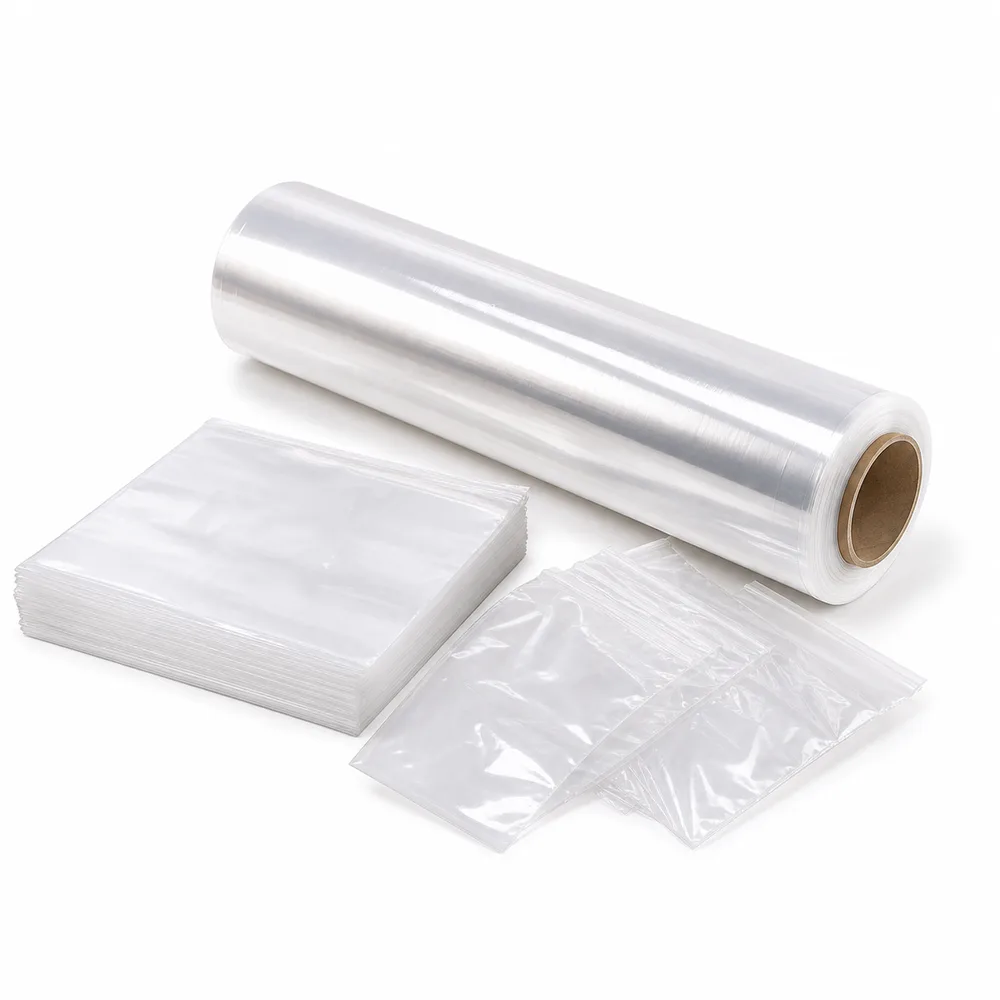
Bundle Shrink Packaging Film for Retail and Distribution Packs
In category: Shrink Film
Specify PE bundle shrink film around the item arrangement, tray or pad, print layout, opening method and distribution trial to assess the complete multipack.
Include your destination, quantity and intended use for a focused sourcing review.
PE Products in this category are usually made of polyethylene (PE, LDPE, HDPE or LLDPE) and are not PVC.
Bundle shrink film brings several product units into an identifiable pack for handling, distribution or sale. It needs to fit the item count, container shape and the way the group will be sold. A package suitable for moving goods into a shop may not provide the same experience a consumer needs when carrying or opening it. This guide concerns PE film around groups of already packaged goods. Its focus is pack integrity and purchasing decisions. Film around bottles or cans is not, by that fact alone, documented for direct contact with the food or drink inside them.
Decide whether the bundle is a sales or distribution unit
If the customer buys the whole bundle, item count, group identity and opening method are central requirements. If the shop removes the film and sells individual units, the task is different. Make that decision before selecting appearance or gauge so the pack serves the intended point in the chain.
A group of matching bottles and a promotional bundle combining different container shapes do not present the same issue. State whether the combination is fixed or changes with the sales program. Changing item count can affect dimensions, artwork and line operation; it is more than editing a number on the order.
Show the complete arrangement with drawings and samples
The dimensions of one container are insufficient for a bundle-film enquiry. Record rows, orientation, gaps and the dimensions of the assembled group entering the wrapper. A top view communicates arrangement, while side views show height differences and where the film meets the items.
If empty and filled containers differ in shape or mass, use a representative packing condition in the assessment. For mixed goods, identify differences in container shape and resistance to deformation for the technical team. The film should not be expected to compensate for unknown incompatibilities between components of the group.
Clarify the role of a tray, pad or film-only design
A multipack may be designed with a pad, tray or no separate support. That is a packaging-design choice affecting item location, cost and opening. Ask the film supplier and line team to assess the proposal with the actual assembled group rather than treating support material as an unrelated purchase.
Removing a pad should not be justified only by subtracting its material weight. Review how the bundle leaves the line, transfers between conveyors and is handled in the shop. Where the current design relies on support, changing it requires a new assessment; film approval for the old arrangement does not automatically cover the new one.
Assess integrity after the shrink process
In collation shrink, film is placed around items and contracts through heat; Dow describes the application for grouping different packaged goods. For procurement, the important result is whether items remain in the accepted arrangement and the pack can complete the handling stages intended for it.
Record the end openings, side shape and underside condition. A smooth face cannot compensate for a problem elsewhere in the bundle. Acceptance criteria should identify which movement or deformation is permissible. Establish those criteria with the packaging team and sales-channel requirements rather than choosing them after viewing the supplier's sample.
Approve artwork in its shrunk position
On a printed bundle, the logo and item count need to remain visible after shrinking. Specify roll direction, print repeat and artwork position relative to the group. Approval of a flat file does not replace a review of how the lettering appears on the completed package.
Distinguish the bundle barcode from individual item codes so the intended sale and scanning process are clear. Where existing labels show through the film, inspect them in the final pack. Keep separate references and approved versions for different artwork options instead of combining several ideas into an undefined sample.
Do not assume an opening is a carrying feature
Where should the consumer or shop worker open the bundle? If a tear line, perforation or handle is proposed, treat it as a feature needing its own assessment. A gap or accessible edge does not, by itself, establish that the location was designed to carry the pack's weight.
Evaluate the sample using the intended handling method and keep the conclusion specific to that method. If film is only meant to hold the group together, retail copy should not promote it as a handle. Brief, understandable opening guidance can support correct use without filling the package with unnecessary text.
Observe the stages beyond the tunnel exit
After shrinking, the pack may move on a conveyor, meet adjacent packs or enter a grouping stage. Include that sequence in the trial. Robopac's bundle-packaging information treats the tunnel as part of a line; the candidate film needs assessment within the operations it will actually encounter.
Record observations at discharge separately from those after the appropriate cooling stage. If the pack changes later, note when and where. The line team should establish the trial conditions; this guide does not prescribe heat or speed settings for unknown equipment or offer a universal operating value for all bundles.
Test the bundle in its next arrangement
An individual pack may look satisfactory yet present difficulty when placed beside other packs. Include pallet arrangement, contact between printed surfaces and shop separation in the evaluation plan. If the bundle is displayed on a shelf, assess its stability and information visibility in that position too.
Ask a trial receiver to record the group and container condition before opening. A loose item, displaced row and damaged pack corner require distinct descriptions. This feedback shows how far the design has worked and where a change is needed, rather than reducing every observation to a general pass or fail.
Compare cost per saleable bundle
Put film cost per accepted pack alongside pad or tray cost, printing and waste. If a material change creates rework or loses individual goods from a group, record that consequence. A lower kilogram price is not a complete economic answer for a bundle that must arrive ready for its intended sale.
Assess proposed recycled content or reduced thickness for the actual pack. ExxonMobil describes collation-shrink developments in defined applications; a development result is not a guaranteed property of an unidentified offered film. Recycled-content percentages and environmental claims should be tied to traceable information for the specific material.
Prepare the multipack film enquiry
Begin with item count, an arrangement drawing and the way the group will be sold or distributed. Saderati reviews that information to facilitate contact with a relevant supplier. Availability, samples and commercial conditions must be established in the response to the request; a category entry is not a ready-stock commitment.
- Container type, filling condition, count and complete-group dimensions.
- Tray or pad, coverage arrangement and intended end openings.
- Line model, roll format, artwork, scanning and opening method.
- Volume, destination, distribution plan and sample acceptance criteria.
Buyer questions
Does bundle shrink always require a pad?
It depends on the goods and pack design. Adding or removing support should be evaluated through the sample and handling route; there is no universal answer for every bundle.
Can any open side be used to lift the pack?
No. An opening is not automatically a handle. If lifting there is intended, that use must be addressed explicitly in the design and application assessment.
Can print be approved without a finished-pack trial?
A flat artwork file supports an information check but does not show the shrunk result. Review text position and code readability on the completed bundle.
Does wrapping beverage bottles establish food-contact suitability?
External wrapping of containers differs from direct beverage contact. State any food-contact application and review the proposed material's documentation for those actual conditions.