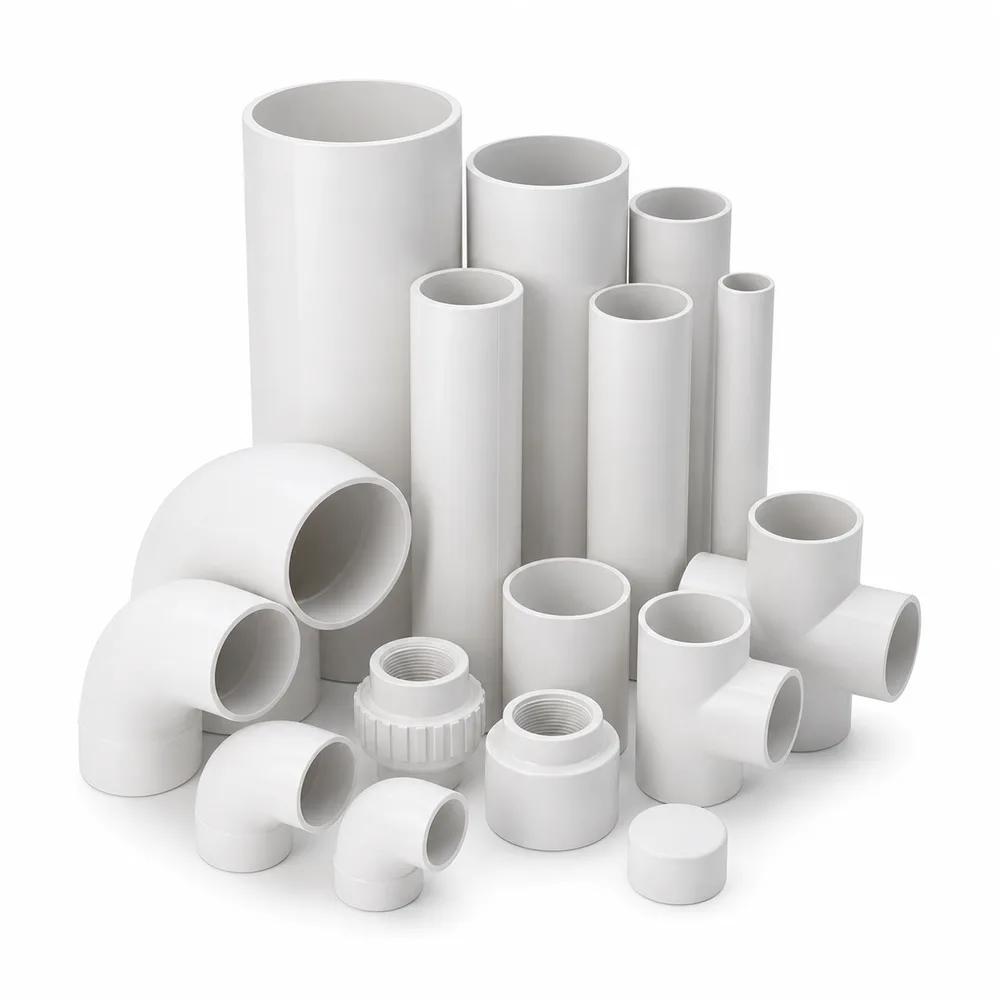
Threaded PVC Fittings
In category: PVC Fittings
Define threaded PVC fittings by thread reference, male or female arrangement, mating material and service. Prepare compatibility questions, sample reviews and a clear enquiry.
Include your destination, quantity and intended use for a focused sourcing review.
PVC These products are made of PVC (polyvinyl chloride).
A threaded PVC fitting is often purchased at an interface: between pipe and valve, a line and a device, or an existing installation and its extension. A small ambiguity at that interface can make the entire order unusable. Two components engaging for the first few turns does not, by itself, establish that they form the intended connection. This guide focuses on defining the interface and answering the questions that should precede an order. Suitability and assembly remain matters for the actual manufacturers' instructions and the responsible technical reviewer, rather than a universal rule applied to every fitting with a thread.
Create a short record for each connection point
Describe the two sides separately. What is the existing component, and what must the new part connect to it? Gather equipment identification, connection drawings and the manufacturer's reference. When an adapter sits between a pipe and a valve, a general photograph of the valve is not enough. The information about the particular port being connected is what matters most.
Record each side's material, stated size, male or female arrangement and intended service. Give similar interfaces separate identifiers so a supplier's answers cannot be assigned to the wrong location. A visible list of unresolved questions is more useful than prematurely confirming uncertain details. It also allows the technical reviewer to request specific evidence instead of repeating a broad inspection of the installation.
Write the complete thread designation
A description such as a one-inch thread may be incomplete without its reference. If existing documents specify NPT, BSP or another designation, transfer that information accurately rather than translating it into a guessed equivalent. Ask the supplier for the exact proposed thread reference and configuration. Initial engagement between two parts is not a final acceptance criterion for the interface.
GF identifies dimensional references for the threaded products in its catalogue. This demonstrates that thread identity belongs in the product definition, not in an optional sales note. If existing components are unmarked, arrange competent identification rather than relying on appearance. Choosing an adapter from a photograph or uncertain measurement merely moves the unresolved question to the installation stage.
Review metal transitions and equipment connections separately
Where one side is metal and the other plastic, include both materials and their arrangement in the request. A PVC component's suitability for another PVC part does not automatically approve every metal-to-plastic transition. Obtain the proposed adapter's drawing and stated application, then compare them with the actual mating component. Do not allow a generic threaded description to conceal that distinction.
Discuss access and removal with the maintenance owner when the connection serves equipment. A fitting having a thread does not prove that the installed assembly can be conveniently dismantled for periodic work. The layout needs to account for the intended service method and available space. Procurement should not try to settle that design question simply by changing the name of the fitting.
Include the sealant in the interface review
Record the proposed paste or tape alongside the connection information. Spears warns that incompatible pastes and improper threaded-joint practices can cause problems in plastic components. Obtain instructions applicable to the actual fitting and sealing material. A method familiar from metal pipework should not be transferred to PVC without checking whether it is appropriate for the proposed arrangement.
Ask whether the sealant is included in the quotation or merely recommended, and request the supporting compatibility information. This page does not prescribe a brand, a number of tape wraps or a universal tightening torque. The installation method must come from the applicable guidance. Ensure the installer receives the same agreed document rather than conflicting instructions passed through informal messages.
Review the fitting's own service documentation
The project's technical owner should define pressure, temperature, fluid and expected operating changes. Do not assign the pipe's stated performance to a threaded adapter without review. Evaluate the proposed fitting under its own reference and documents. Drinking-water or another controlled application also requires the evidence and acceptance relevant to that market and project; the material name is not a substitute.
Remember the conditions around the interface: adjoining equipment, assembly movement, access for tools and future maintenance can all raise questions for the reviewer. Listing them here is not a design calculation. It ensures the right person is asked before buying. If essential answers are missing, keep the request identified as a candidate for technical review rather than a fully approved component.
Give sample verification a defined purpose
For sensitive interfaces, a sample or reference part can reduce uncertainty when the intended examination is clear. Record the sample identity, mating component, thread information and feature under review. If specialised measurement or gauging is needed, identify who will perform it and how the result will be recorded. Turning two components together by hand is not a replacement for that evaluation.
Do not force uncertain components into engagement, and report unusual resistance for investigation. Sample acceptance should be limited to what was actually checked; an undamaged appearance does not prove all operating requirements. Performance testing of an assembly requires the approved project method and relevant instructions. Link the accepted sample to the purchasing reference so delivered items can be compared meaningfully.
Protect identification through packing and receipt
Ask how the fittings will be packed so threads and openings are protected from damage and similar items do not become mixed. Each package should show the model, thread designation, male or female arrangement and count. Keep close-looking sizes in separate identified order lines. The warehouse should be able to select a part from its label rather than from resemblance.
On receipt, check readable identification and the visible condition of threads, opening edges and cleanliness. Record discrepancies and keep damaged or unidentified items out of installation pending a decision. Reconcile quantity, sales unit and package contents with the confirmed order. An intact outer carton alone is not evidence that every fitting inside has the correct reference or acceptable condition.
Build the enquiry around the actual interface
Tell Saderati which two components must be connected, where the goods will be used and what the service involves. For each line, include the thread reference, both materials, male or female arrangement, size, quantity and available documents. If one end is a solvent socket, include that end's dimensional reference as well. The thread describes only part of a mixed-end fitting.
The quotation should identify the offered code, supporting documents, included items, sealing material and delivery conditions. Request alternatives separately with their differences made explicit, and keep final acceptance subject to technical review. Saderati receives clear requirements to facilitate contact with relevant suppliers. This introduction does not guarantee stock, compatibility between unspecified threads or approval for a particular installation.
Buyer questions
Can NPT and BSP be exchanged just by matching nominal size?
No. Check the complete designation and configuration of both components. Where a transition is needed, specify a defined adapter that has been accepted for the intended interface.
Should a fitting that becomes difficult to turn be tightened harder?
Do not use extra force to compensate for uncertain compatibility. Stop and check component identity and the assembly instructions. The applicable product guidance must determine the installation method.
Is any pipe sealing paste suitable for PVC?
No. Compatibility with the plastic, service fluid and operating conditions must be established. A general retail recommendation or previous use on metal is not sufficient evidence.
Which document matters most for an equipment adapter?
Start with the equipment port drawing or specification, its material, thread reference and service conditions. An unlabelled photograph is supplementary information, not a complete connection definition.