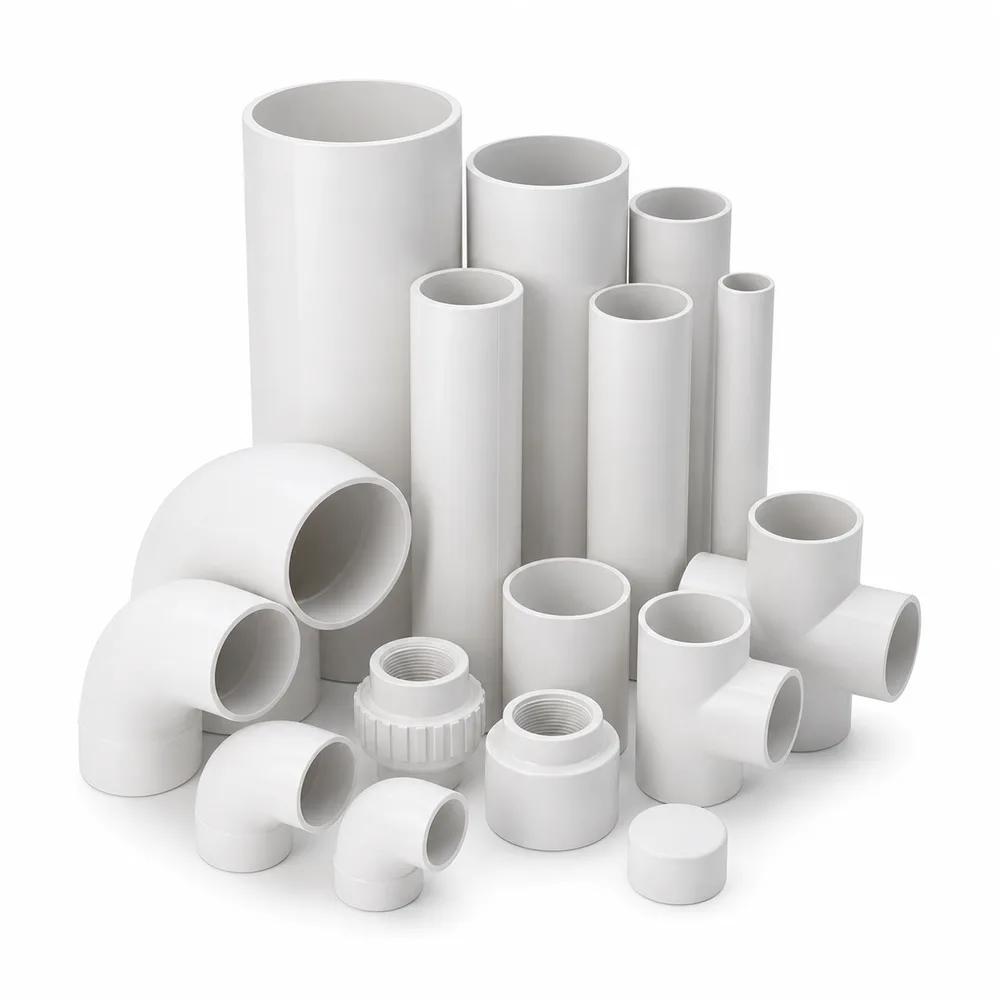
Building PVC Pipes
In category: PVC Pipe
Plan a building PVC pipe purchase around the actual drainage or vent application, coordinated drawings, fitting references, delivery stages and inspection records.
Include your destination, quantity and intended use for a focused sourcing review.
PVC These products are made of PVC (polyvinyl chloride).
An on-time delivery can still be the wrong delivery for a building project. A fitting may not fit the shaft, a supplied length may be awkward to move through the site, or the product documents may not satisfy the designated reviewer. Building PVC pipe is a broad purchasing label, not a complete service specification. This page concentrates on procurement coordination, particularly for drainage and vent applications. Use in pressurised water, hot water or another service requires its own product and engineering review. Saderati facilitates sourcing enquiries without treating the listing as approval for every building application.
Identify each line by its function
Ask the building-services team to identify whether each line carries drainage, serves as a vent, handles rainwater or performs another defined duty. Do not let the word building substitute for an application description. Where several systems share one purchase order, assign separate line references and clear labels so visually similar materials are not exchanged casually in the site store.
Keep PVC and CPVC descriptions distinct in the enquiry. If a particular system has already been approved, route proposed replacements through the same review process. Request the actual product reference and the manufacturer's stated application. Similar colour or appearance does not show that a substitute is suitable for a different service or acceptable under the project's requirements.
Buy from the coordinated drawing revision
Compare the quantity schedule with the latest coordinated layout before requesting prices. A relocated bathroom, shaft or finished-floor level can affect the required lengths and fittings. Nominate one person to confirm the purchasing revision. Combining quantities from an updated schedule with dimensions from an older drawing creates a discrepancy that is often discovered only when the installer reaches the affected area.
Treat a clash with structure, ductwork or maintenance access as a design issue. Purchasing should not substitute a similar-looking fitting merely to make something fit. Ask the contractor to flag space-critical components and obtain the offered manufacturer's dimensional information. Those checks can be completed while a quotation is still open, when changing the order is relatively straightforward.
Include the fittings that preserve access
A drainage line is more than straight pipe. The fitting configuration and planned inspection access need to remain consistent with the design. List these components by an unambiguous description and product reference. Words such as tee or elbow can cover different geometries, so request a referenced drawing where the shape matters rather than relying on a small catalogue photograph.
For components behind walls or ceilings, discuss future access with the construction team before ordering. The purpose is to direct the question to the responsible designer, not to improvise a layout through a product page. A comparison based only on the cheapest collection of parts is incomplete if it removes access that the accepted design intended to preserve.
Match the submitted system to the building context
Building type, route and destination requirements belong in the review. IPEX markets distinct DWV system families for different building applications. The purchasing lesson is to obtain the specific product submittal and have it checked against the project's conditions, rather than interpreting the generic term PVC as approval for all spaces within a building.
Coordinate penetrations through rated walls or floors with the responsible building team. They should identify the accepted protection detail and compatibility of associated materials. Do not insert unsupported claims such as fireproof, silent or suitable everywhere into the order. If a performance claim matters commercially, identify the evidence and the complete arrangement to which that evidence actually applies.
Give a sample a specific job
A sample is worthwhile when it answers a defined purchasing question. That might concern the mating interface, marking clarity, a space-critical fitting or the proposed packaging. State the question when requesting it and retain the relevant drawing alongside the sample. Otherwise the delivery can become an attractive object on a desk without resolving the uncertainty that held up approval.
Record the sample reference, dimensions checked, mating component and reviewer decision. Photographs should include its identifying label. If the final offered item differs, reopen the affected check instead of assuming that sample approval transfers automatically. Acceptance of one visible length is not unconditional acceptance of every component or every future production batch carrying the same brand.
Make delivery stages useful to the installer
Storage space and movement through a building are often constrained. Ask the contractor which supplied lengths and bundle arrangements can be received and moved safely using the site's planned methods. Where procurement is staged, define the scope of each release. Early deliveries should support the work sequence instead of filling limited storage with items needed much later.
Organise packing information by agreed floor, zone or system, with clear separation of similar items. Maintain a record of unused stock between releases so the next purchase reflects what remains available. Include packing and delivery sequence in the offer comparison. They are part of obtaining usable material, not minor details to discuss only after the order has been paid.
Set inspection responsibilities before work is concealed
At receipt, record quantity, dimensional reference, end condition and visible damage. Give disputed items an identifiable holding location rather than allowing them to circulate into installation. Decide in advance who can release or reject such material. The storekeeper should not have to make an engineering decision based on a delivery driver's assurance that a difference is harmless.
Installation acceptance and testing belong to the approved project procedure. IPEX's installation guide addresses named systems; its details should not be generalised to an unidentified pipe. Require the handover records and inspection release stages to be visible in the construction plan. This guide does not specify test settings, joint curing times or permission to conceal a particular installation.
Send an enquiry that a contractor can reconcile
Start with the project type, destination country, service descriptions, drawing revision and quantity schedule. For each line include the size with units and reference system, supplied length, end form and dependent fittings. If selection still requires the supervising engineer's approval, say so explicitly. That distinguishes a proposal under review from an instruction to dispatch a final accepted system.
Ask the supplier to list alternatives separately and explain technical differences or exclusions. Saderati can use this information to review the sourcing request and facilitate relevant supplier contact. The final purchasing record should identify goods, required documents and delivery stages. Descriptions such as premium quality are not measurable acceptance criteria and should not replace the approved product reference.
Buyer questions
Can building PVC pipe be used for pressurised water?
The label alone cannot establish that. Check the offered product's intended service, the line design and the relevant documents. Do not automatically transfer material purchased for drainage into a pressure application.
Does matching colour establish an acceptable substitute?
No. Compare product identification, wall construction, dimensional system, joining details and intended use through the project's technical review. Colour is only a visual characteristic.
How can staged orders avoid missing small parts?
Reconcile each release with its dependent fittings and the recorded remaining stock. Keep zone labels and delivery records so the next order is based on the actual site position.
What is the most useful starting document?
An approved quantity schedule with service descriptions and drawings for space-critical items is a strong starting point. If those are incomplete, identify the open questions rather than presenting assumptions as settled requirements.