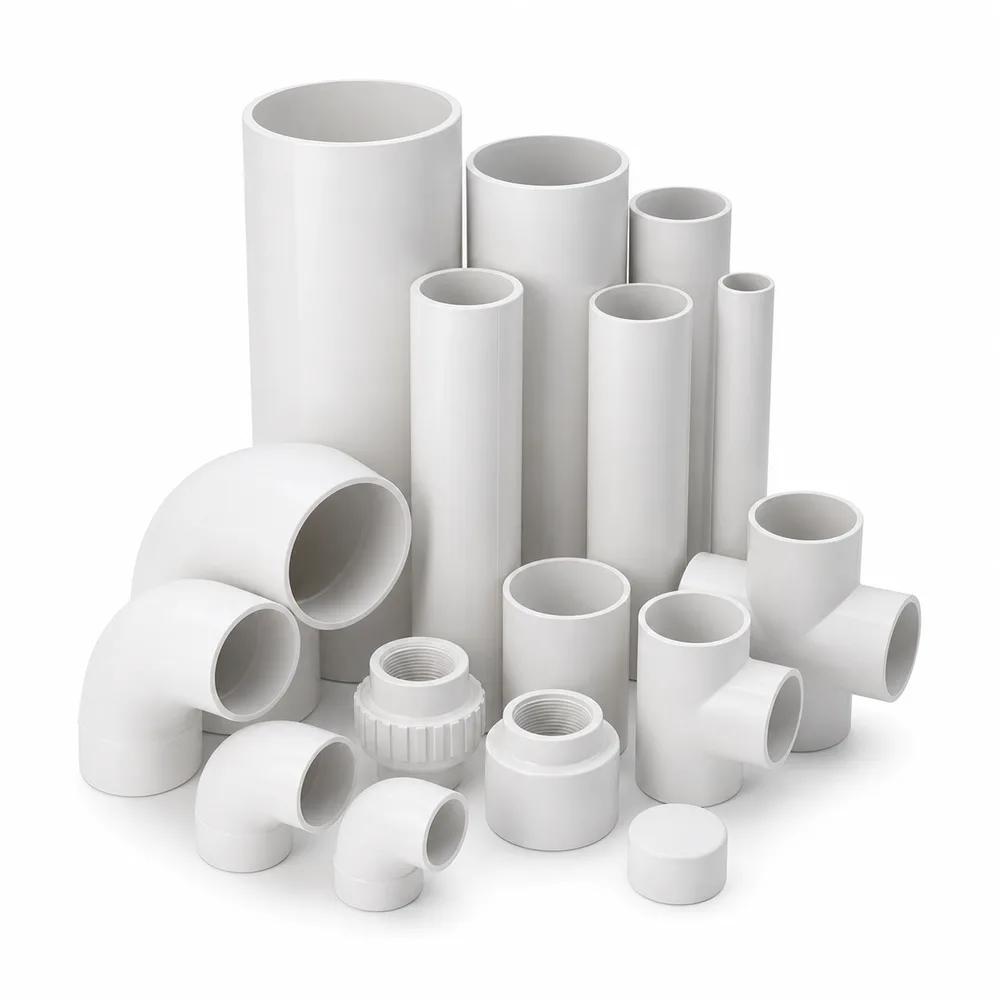
Pressure PVC Pipes
In category: PVC Pipe
Prepare a pressure PVC pipe enquiry with service conditions, dimensional references, joint details, traceable documents and a practical receiving checklist.
Include your destination, quantity and intended use for a focused sourcing review.
PVC These products are made of PVC (polyvinyl chloride).
A pressure-pipe purchase usually begins with a diameter and a quantity. It should not end there. The person obtaining quotations needs enough information to distinguish a suitable proposal from a pipe that merely looks substantial. Pump operation, operating temperature, joining method and the destination's approval requirements can change the decision. This guide addresses the procurement work around those engineering decisions. Saderati helps review sourcing enquiries and connect buyers with relevant suppliers; it does not assign a universal pressure class to this listing or confirm an unspecified product's suitability.
Replace the label high pressure with a service brief
Ask the project engineer to describe the conveyed fluid, operating pattern, design conditions and equipment interfaces in a controlled document. Separate established requirements from information still being investigated. A blank field with an owner is more useful than a guessed number that silently becomes a contractual requirement. Give the document a revision so every bidder receives the same basis.
A pressure designation belongs to a particular product and stated conditions. Request the manufacturer's explanation of that designation rather than accepting a reseller's adjective. Keep pipe capability distinct from the limits of fittings, valves and transitions. Approval of a straight pipe does not automatically approve the assembled line or every component included in a quotation.
Explain what happens when the system changes state
A single pressure-gauge reading does not describe an entire pumped system. Have the engineering team identify whether start-up, shutdown, valve operation, elevation changes or future extensions affect the selection. The purchasing brief should carry their requirements without asking a sales representative to invent the design. If an alternative is proposed, return it to the same decision maker for review.
Describe the expected fluid and environmental temperature range, including seasonal operation where relevant. Do not transfer a reference value from another manufacturer's table simply because both products are called PVC. Keep the offered product's own technical documentation with the evaluation. This makes it possible to see which operating conditions were reviewed and which questions remain unresolved.
Make the dimensional system explicit
Two offers can use the same nominal size while referring to different dimensional systems. Ask for the stated standard, outside diameter, wall designation and supplied length as separate fields. For an extension to an existing installation, include legible pipe markings and the connection details already in service. A photograph provides context but cannot establish every mating dimension.
Keep units consistent across the enquiry, drawing and quotation. Schedule, dimensional ratio and pressure class are not interchangeable descriptions. Require a bidder to follow the project's terminology or clearly explain the proposed difference. A comparison sheet should make such differences visible before commercial negotiation, rather than leaving the receiving team to discover that apparently equivalent items do not connect.
Evaluate a pipe-and-joint package
Review how the line will connect before finalising the pipe quantity. The socket, gasket, solvent-cemented connection, flange or transition needs an identified place in the system. JM Eagle publishes separate installation guidance for different product families; this is a useful reminder to request the guide applicable to the actual offered product rather than a generic PVC instruction sheet.
Ask the bidder to identify included accessories and exclusions. If jointing materials are purchased elsewhere, assign responsibility for compatibility review. Where samples are appropriate, retain an identifiable pipe-and-fitting set for dimensional evaluation. Such a review supports purchasing but does not replace engineering approval, qualified installation or the project-specific inspection plan.
Require documents that identify the offered item
An impressive folder is less useful than a small set of traceable records. Start by matching manufacturer, product reference, claimed standard and production identification to the quotation. Then distinguish documents required for the destination from optional background information. Resolve discrepancies in names, scope or validity before issuing the order, when there is still time to clarify the offer.
For drinking-water service, pressure suitability and hygienic approval are separate questions. Ask the responsible project reviewer to determine the documentation required for that product and market. For chemical service, identify the actual fluid and operating conditions for specialist compatibility review. Neither a generic material description nor this purchasing guide certifies a particular shipment for a particular use.
Agree the receiving record before dispatch
Prepare a receiving sheet that brings together purchase-order line, supplied pipe description, bundle label and production identifier. Count lengths and record stated length separately from shipment weight. Weight alone cannot show that the correct mix of sizes has arrived. Dispatch photographs can help establish how bundles were arranged and labelled before the delivery changed hands.
Record visible damage, end condition and marking legibility during the incoming inspection. Keep questionable material identifiable and separate from released stock while the designated technical person decides its status. Agree who submits a discrepancy report and how replacements will be handled. A clear process avoids a small uncertainty becoming an undocumented substitution or a delay across the whole project.
Keep delivery inspection distinct from system testing
Checking delivered goods is not the same as accepting an installed line. The first verifies what arrived and its visible condition; the second depends on installation, engineering requirements and the approved commissioning procedure. Establish required records and inspection hold points before ordering so the contractor understands what must be reviewed before subsequent work conceals the installation.
Charlotte Pipe warns against compressed-air testing of PVC pipe and fittings. Do not obtain test pressure, duration or restraint instructions from a sales quotation or a general article. Those details belong in the approved project procedure and the relevant manufacturer's instructions. This page deliberately provides no executable test settings or commissioning sequence for an unidentified system.
Compare complete offers and plan usable deliveries
Send a line-by-line quantity schedule with the approved specification revision. Request separate technical compliance, deviations, packing and commercial terms. A lower unit price is meaningful only when the scope is comparable. Identify missing accessories or required records as open issues, not as assumed savings. Record the person who accepts any proposed deviation and retain that decision with the order.
Explain the destination, unloading arrangement, load-length restrictions, site sequence and anticipated repeat purchases. These details allow a supplier to propose a delivery that can actually be received and used. Submit this package to Saderati for sourcing review. The resulting order should identify accepted product codes and agreed documents, so the next purchase starts from a controlled reference rather than another ambiguous description.
Buyer questions
Is a thicker pipe automatically the better choice?
No. The selected item must fit the design, dimensional system and connection arrangement. Assess wall information with the product documentation. A larger physical dimension does not establish approval for every operating condition.
Can an existing pipe be matched from a photograph?
A clear photograph of markings is useful, but dimensions, connection details and project records are also needed. Where information is missing, have it measured and reviewed before approving a replacement.
Does a pressure rating establish drinking-water approval?
No. Mechanical suitability and hygienic documentation require separate review for the identified product and destination. A pressure-pipe listing is not a certificate for the delivered material.
Does this listing promise a specific class or available stock?
It does not. Availability, product designation, sample arrangements and commercial terms are established through the enquiry. Final selection for the intended line remains subject to the buyer's technical approval.