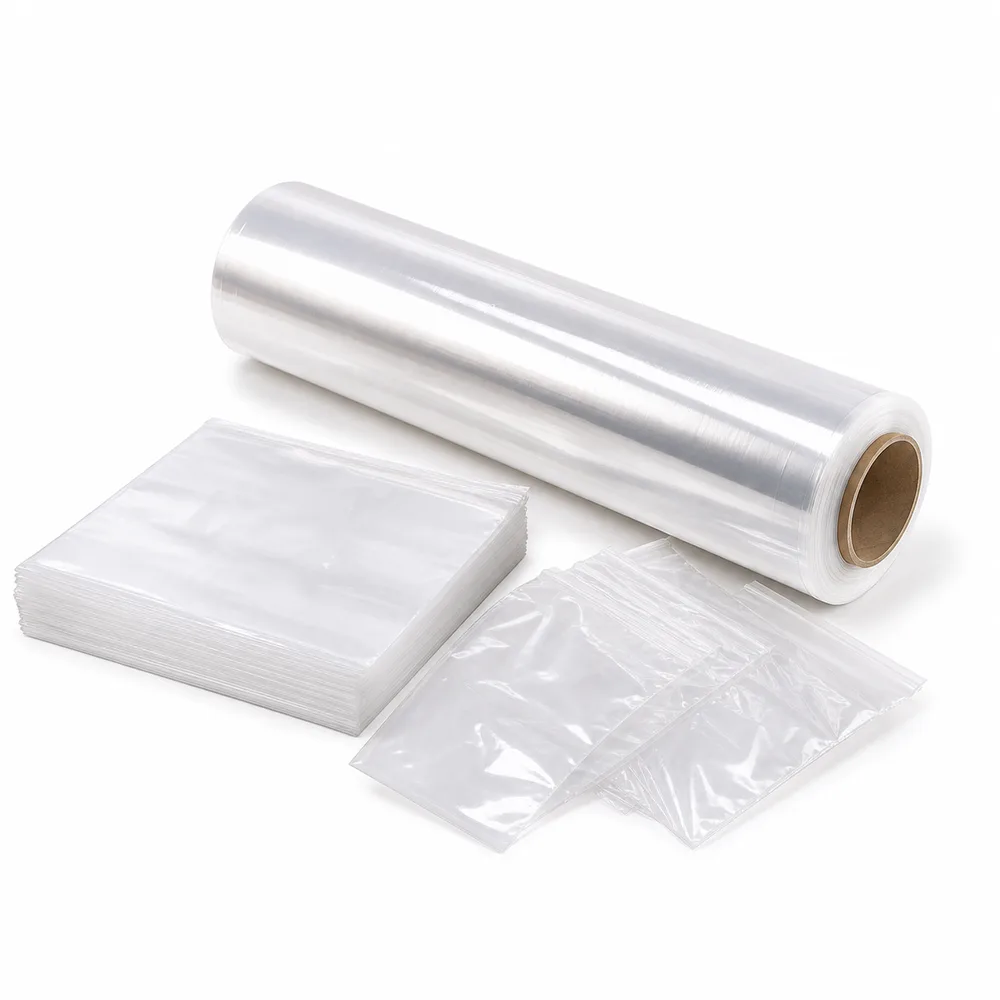
PE Shrink Film Rolls
In category: Nylon Packaging Film
Select polyethylene shrink rolls for a mixed-product operation: material identity, pack families, changeover records, trial scope and usable output.
Include your destination, quantity and intended use for a focused sourcing review.
PE Products in this category are usually made of polyethylene (PE, LDPE, HDPE or LLDPE) and are not PVC.
In a workshop packing several box sizes or product shapes, a PE shrink roll is more than a shared consumable. Changes in pack geometry can alter film consumption, presentation and the shrink result. This guide focuses on selecting and managing polyethylene shrink rolls across a varied product range. The Persian catalogue name nylon shrink uses a local trade term for PE; it should not be interpreted as polyamide nylon. The material must be evaluated for the intended thermal shrinking process. Ordinary covering film and stretch wrap are not automatic substitutes.
A short shrink-film name is not a full material specification
Shrink packaging can involve different material families and processes. State PE explicitly for this enquiry and identify the roll format. If replacing an existing film, do not copy only the name on an old invoice. Gather verifiable information about the current sample and the equipment consuming it. Transparency, feel or the sound made when handling film cannot reliably identify its complete polymer construction.
Polybags' film guide distinguishes shrink grade from stretch wrapping film. The distinction is practical: stretching film around a load and shrinking film through a thermal process are different operations. Changing from one shrink-film family to another also requires an equipment and product compatibility review. Similar-looking rolls are not sufficient evidence that the new material can be run under the old approved conditions.
Group products before choosing a shared roll
Review the pack list by process-relevant features rather than commercial product names: dimensions, shape, rigidity of the primary package, projections and sensitivity to the process. Two similarly sized boxes can behave differently if their structures differ. Likewise, a flat item and a tall assembly should not share an approval group simply because they consume a similar film weight during a trial.
Choose a representative sample for each family that captures its important constraints. If reducing the number of roll codes is an objective, check the waste and operating changes introduced by a shared roll. Simplifying inventory can be useful, but not at the expense of unsuitable packs or increased rejects. The trial outcome should identify the product families approved for each film code.
Match the actual pack to the equipment constraints
Read machine limits as a set of interacting constraints, not a list of maximum values that can necessarily be combined. For example, Robopac notes for certain Pack configurations that maximum dimensions cannot all be achieved together. The purchasing implication is to check the real package against the particular machine model and configuration, rather than selecting from the largest number printed in a brochure.
Confirm permitted film family, sealing arrangement, roll dimensions and product path from equipment documentation and the technical owner. This page gives no universal temperature, dwell-time or speed settings. Changes must remain within authorised, safe operation. If the primary product or its container is sensitive to heat or distortion, decide whether the process itself is appropriate before proceeding with a production trial.
Make a changeover repeatable through a record
For each approved product-and-film combination, record the information operators need: material code, pack presentation, the cutting arrangement used and the reference for authorised machine conditions. The technical owner should define the changeover checks. This does not replace equipment instructions; it prevents an earlier decision from having to be reconstructed from one person's memory every time the product changes.
When results differ after changing a roll, record the new roll identity and the product being packed. Do not reduce the investigation immediately to bad material. Selected size, unwind orientation or preparation may also have changed. Retaining examples from before and after the change supports a useful comparison. Several undocumented changes at once make it much harder to determine which difference mattered.
A smooth-looking wrap is not the only acceptance criterion
Assess the finished pack at the appropriate stage when it is ready for relevant handling. Check seam position, corners, uneven shrink and effects on the primary package. Where several components form the pack, confirm that the intended arrangement remains. Smooth film must not conceal a weak closure or damaged contents. Record visual acceptance and functional acceptance separately so that neither becomes a substitute for the other.
Opening at destination is part of the outcome too. Product information should remain readable and the user should be able to remove the wrap as intended. A film shrinking around goods does not alone establish complete waterproofing or a qualified security seal. Define and evaluate those functions separately if required. Direct food contact also needs an assessment independent of the visual quality of the shrink result.
Manage roll inventory around actual consumption
In a mixed-product workshop, leftover rolls can become a greater complication than the initial purchase price suggests. Keep material code, specification and approved application family with every partly used roll. Do not return an unidentified roll to production merely because its width looks familiar. Obtain storage and usability guidance for the specific material instead of assuming a universal period applies to every shrink film.
Printed film also requires artwork and information-version control. Even when dimensions and material remain unchanged, revised wording can limit the usefulness of old stock. Before choosing common printed film for several products, identify which information is fixed and which varies. Match order quantity to the real product mix, artwork-change plans and sample needs so that unsuitable inventory does not constrain production flexibility.
Review trials and cost by package family
Record film used for acceptable packs, trim waste, start-up rejects and changeover effort during evaluation. An economical option for one product may be unsuitable for another family. Read price per kilogram alongside actual usable output, and do not turn one short run into a permanent saving guarantee. State which products and conditions were evaluated so that later users understand the scope of approval.
For a Saderati enquiry, provide the package-family list, current sample, equipment identity, roll form, trial quantity and reason for change. The respondent should explain whether a common or separate specification is proposed and identify validation still required. Link each family's approved pack to the roll code and specification revision. A repeat purchase can then preserve a clear relationship between film identity and its permitted applications.
Buyer questions
Can one roll be used for every product?
Only if approved for the relevant families. Shared stock needs evaluation of consumption, waste, authorised process conditions and package result. Similar product dimensions alone do not establish interchangeability.
Is ordinary polythene covering film also shrink film?
Not necessarily. Grade and construction must suit the intended thermal process. Do not infer shrink capability from the local trade name, transparency or gauge; request relevant information and samples.
Why check the first pack after a product change?
The relationship between geometry, presentation and process has changed. A start-up check can reveal an incorrect roll code or arrangement before production continues, following the workshop's approved procedure.
Is a shrink-wrapped package completely waterproof?
That function is not proven by visible shrink alone. Construction, seams and openings need assessment against the specific requirement. Include waterproofing as a separate acceptance criterion when it is genuinely needed.