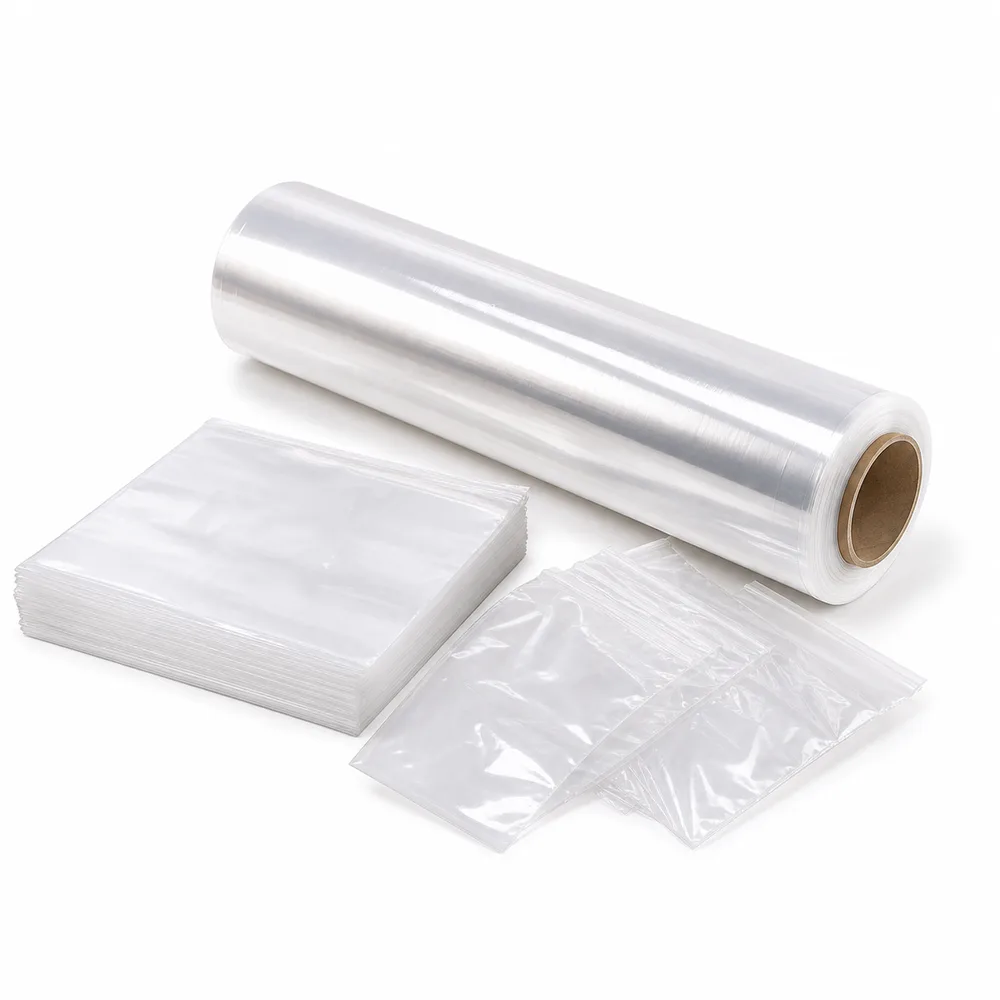
Wide PE Packaging Film Rolls
In category: Nylon Packaging Film
Specify wide PE packaging film by opened width, supplied fold, cutting plan and actual covering task. Includes clarification of the trade name nylon.
Include your destination, quantity and intended use for a focused sourcing review.
PE Products in this category are usually made of polyethylene (PE, LDPE, HDPE or LLDPE) and are not PVC.
Wide polyethylene packaging film becomes relevant when covering a large surface or object with narrow film would create too many cuts and overlaps. The decision involves more than buying a wider roll: understand its folds, opened dimensions and use at the packing station. The Persian catalogue term nylon is used here as a trade name for PE film, not technical nylon or polyamide PA. State the polymer explicitly in an international enquiry so that a naming ambiguity does not lead to an offer for an entirely different material.
Are you covering a surface or making an enclosure?
A sheet over the top of a product has a different consumption pattern from a cover that must extend down its sides. Before choosing width, draw the film path: which faces are covered, where allowance is required and where the material will be secured or closed. For an object with projections, the footprint alone is insufficient because the film's route over those projections changes the required sheet dimensions.
If the roll will become a welded cover, include seams and converting allowances in the drawing. If it is simply cut into loose sheets, holding the material and unfolding it may be more important. Make that distinction in the enquiry. The respondent needs to know which final output the raw film will serve, rather than receiving only a request for a large width.
Distinguish supplied roll width from opened film width
A wide sheet can be folded onto a narrower roll. Polybags' technical guide distinguishes centre-folded film, single-wound sheeting and tubing as different formats. Do not confuse the width at delivery with the useful width after opening. Show both in the drawing and label, and identify whether the material is an opening sheet or a tube with two connected faces.
For multiple folds, the fold arrangement and opening sequence need to suit consumption. Open a sample fully; inspecting the roll edge alone does not establish the internal arrangement. Identify any face that must contact the product. For price and quantity comparisons, both parties should use the same definition of opened area and the number of layers actually consumed by the application.
Resolve the cutting plan before ordering
A wider roll does not always reduce waste when a workshop handles several object sizes. List the sheet dimensions used and identify which can be cut from a common roll. Mark crosscuts, spare margins and remaining pieces on a layout. If offcuts will be used elsewhere, count that use only when it is realistic and traceable, not as an assumed saving that never occurs in production.
Decide whether cutting takes place at the packing station or another area supplies prepared sheets. That affects table space, storage of cut pieces and the number of operations. Compare film consumption per acceptable cover between options. Lower roll weight or a cheaper price per kilogram does not provide a complete economic answer without understanding opened width and actual cutting waste.
Make the wide format workable in the real space
Review roll location, film withdrawal, cutting surface and the space required to unfold the sheet. A compact stored roll can require a large working area once opened. Roll weight and dimensions must suit approved handling equipment. Do not expect staff to lift or spread material outside the workshop's safe handling method just because a nominal roll size seems convenient for purchasing.
During sampling, observe the usual workflow rather than carefully preparing only one sheet. Folds catching, film touching the floor and offcuts accumulating can alter the result. If unfolding requires two people to coordinate, include that in station design and time assessment. A format that works on a dimensional drawing should also be manageable in the actual environment with the resources intended for production.
Separate general covering from specialist film applications
Width does not establish greenhouse suitability, long-term outdoor performance, a building vapour-control function or corrosion inhibition. These are separate requirements that need evidence for the specific material. Ordinary covering film should not be substituted for shrink film or pallet stretch wrap without assessment either. Polyethylene is a material family, not a promise that every formulation and structure behaves identically.
For painted, glossy or sensitive surfaces, evaluate the proposed film with the actual surface and contact conditions. Particles, dragging over an edge and movement of the cover can matter. Equipment covering also has to follow the equipment manufacturer's instructions. Do not treat film as a general solution for covering operating machines, hot areas or ventilation paths. Define the cover's role and use restrictions before applying it.
Inspect the opened sheet and completed cover
Check unfolding, surface continuity, edge condition and defects that affect the final covering task. A crease visible only while wound is different from a line that persists after opening. Where the film is welded, assess folded regions and seams in the converted cover as well. Record defect location and consequence so that the technical response can address the actual issue rather than a vague quality complaint.
Fit the cover to the real object and remove it according to the expected process. Check access to identification, compatibility with permitted handling and ease of removal. The goal is not merely an untorn sheet at the first moment. It should perform the intended role until the end of the stage for which it was selected. Keep untested conditions explicitly separate from approved uses.
Include a fold drawing and quantity basis in the enquiry
For a Saderati enquiry, provide object or surface dimensions, intended cover shape, opened width, supplied width, fold format, candidate gauge and cutting or welding route. State whether quantity means roll length, opened area or net film weight. Mark unresolved details as requiring a proposal and sample rather than presenting them as already approved specifications. This allows a respondent to explain realistic options.
Review polymer identity, roll arrangement, core allowance, edge protection and labelling in the offer. A roll photograph does not approve a fold drawing. Link the reference sample and specification to the commercial proposal so that a later order does not silently change fold arrangement or delivery width. Confirm manufacturing capability, preparation requirements and delivery conditions with the supplier responding for that specific option.
Buyer questions
Does the Persian term nylon mean technical nylon here?
No. This catalogue group uses the local trade term for polyethylene film. In technical English, nylon refers to polyamide. Specify the actual polymer and construction instead of relying on a literal translation.
Which width belongs on the order?
State both supplied width and fully opened width. Tubing and multiple-fold formats need a drawing so that both parties understand the connected faces and opening arrangement in the same way.
Is wide film suitable for outdoor use?
Width alone does not establish that capability. Describe exposure conditions and duration, then request evidence for the offered film. General covering is not interchangeable with a qualified agricultural or outdoor application.
How can two roll options be compared economically?
Compare cutting layouts, actual waste, preparation effort and acceptable covers produced. Price per unit weight without opened width and consumption context is insufficient for a useful comparison.