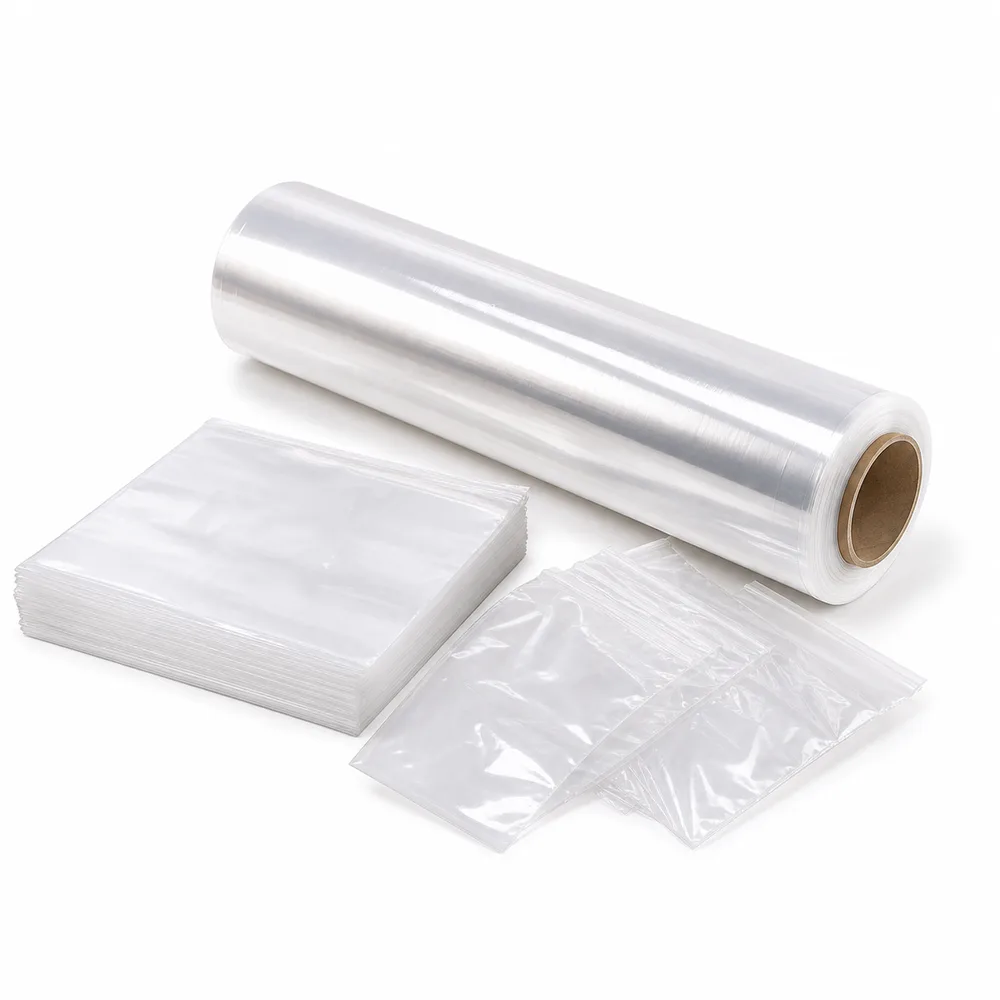
Clear Polyethylene Film Rolls
In category: PE Film
Specify clear polyethylene film around the finished pack: visibility, haze, roll format, converting behaviour and a practical sample approval process.
Include your destination, quantity and intended use for a focused sourcing review.
PE Products in this category are usually made of polyethylene (PE, LDPE, HDPE or LLDPE) and are not PVC.
Clear polyethylene film is useful when the contents need to remain visible, but visibility is only one part of a workable package. The roll also has to fit the equipment, unwind predictably and deliver an acceptable appearance after cutting, sealing or handling. This guide helps buyers describe clear PE film in terms that a converter can evaluate. It does not assign an unverified thickness, formulation or certification to a product simply because it appears in this catalogue. A successful enquiry connects the appearance required by the customer with the actual converting process and a traceable sample.
Start with what the customer must see
A spare-parts distributor may need a number to remain readable through the package. A textile business may care more about recognising colour and texture. A manufacturer of personal-care accessories might prioritise an orderly outer presentation. These are different viewing tasks, even if all three buyers request very clear film. Describe the object, the viewing distance and the expected lighting before discussing an optical target.
Place candidate film over the real item, not just a white desk. A dark component can reveal marks that were unobtrusive against a light background. Fine lettering can expose distortion that is irrelevant for a large plain object. The useful reference is the finished package as encountered by the customer, rather than a carefully stretched sheet held up to a lamp.
Separate haze from other appearance questions
Haze, light transmission and surface gloss describe different aspects of appearance. ASTM D1003 addresses haze and luminous transmittance in transparent plastics. Referring to that method does not establish that a particular offered film has been tested. When a numerical result matters, ask for the method, specimen thickness and report conditions instead of accepting an unexplained optical percentage.
An instrumental result should support a relevant visual requirement, not replace it. If colour recognition is the main objective, retain an approved pack showing the intended contents. If reading an internal label is critical, include that label in the approval exercise. Ask a suitable laboratory which measurement best addresses the question. There is no reason to copy a demanding optical limit from an unrelated application.
Judge the opened film, not just the wound roll
A wound roll contains many layers, whereas the customer may look through only one or two. Its photograph therefore cannot establish the appearance of the final package. Request an opened sample and state whether the finished construction includes overlaps, folds or multiple layers. Check those regions too, particularly when they cross a viewing window or cover printed information.
Keep thickness and layer count comparable when reviewing competing samples. A thinner specimen may look clearer without proving that its formulation is superior for your application. Code the samples and record which product and background were used. This creates a common reference for purchasing, quality and sales, who might otherwise judge different pieces under different conditions and reach incompatible conclusions.
Define the roll as an equipment input
Single-wound sheet, centre-folded film and tubing do not describe the same converting input. Explain whether the roll feeds a bag-making machine, an overwrapping process or manual cutting. State how width is measured, especially for tubing or folded formats. A simple drawing of the opened and supplied form often resolves more ambiguity than repeated use of the word width.
Confirm core bore, maximum roll diameter, handling limits and unwind direction with the people operating the equipment. If a surface is treated or printed, identify its orientation in the roll documentation. A visually attractive film is not useful when the roll cannot be mounted or its format requires an unplanned converting operation. These mechanical details belong in the enquiry, not after commercial agreement.
Turn visible defects into a usable acceptance reference
A visible particle, a persistent longitudinal line and a wrinkle across a display window are different observations. Photograph and locate each issue, then explain its effect on the package. A minor mark outside the viewing area may be acceptable where the same mark across a small product code is not. Mark sensitive zones on the pack drawing rather than asking vaguely for defect-free film.
Agree how incoming rolls will be sampled and under what viewing conditions. Retain an identified reference sample so that expectations do not drift between orders. Some issues emerge only after unwinding or running the film, which makes an outside-roll inspection insufficient. Include those observations in the trial record and distinguish them from damage introduced during your own handling or storage.
Do not trade package function for an attractive sheet
A clear film that presents the product well may still need protection from a sharp component edge. Describe the filling operation, contact points and closure before choosing the construction. Where heat sealing is used, evaluate the sealed pack after normal handling. The appearance of unconverted film cannot reveal every weakness at a finished seam or folded corner.
Thickness, softness, layer separation and converting behaviour need to be considered together. Making the film thicker is not a universal repair, and reducing gauge is not justified solely by a lower roll weight. Compare usable output, rejects and operating convenience. The better purchase is the film that meets the agreed pack requirement consistently at an understood consumption, not necessarily the lowest quotation per kilogram.
Clarity does not prove composition or food suitability
You cannot identify the complete formulation or establish food-contact suitability by looking through a film. For direct food contact, communicate the food, contact duration, temperature and destination market, then request documentation applicable to the actual finished film. FDA guidance links regulatory assessment to the components and their intended use; the label PE is not a substitute for that assessment.
Likewise, a clear appearance does not establish a recycled-content percentage or local recyclability. Define and substantiate environmental claims separately. Sensitive applications need review by the buyer's appropriate technical team before approval. This sourcing guide helps frame the questions; it does not certify a material or replace the assessment of the package and its intended conditions of use.
Finish the trial with an identified reference pack
Run the film through the intended sequence, beginning with roll mounting and ending with the packed article. Check appearance after the relevant storage or handling interval, not only immediately at the machine exit. Record roll identity, settings, date and rejection reasons alongside photographs. This makes a later discussion about a cloudy window or damaged seal more useful than an isolated image.
Link the approved reference to the commercial specification. Decide which later changes require another sample, such as a different construction or production source. Both parties can otherwise believe they supplied clear film while relying on different interpretations. A documented reference package connects a subjective appearance decision with an identifiable order and a repeatable approval process.
What to include in a clear-film enquiry
Send the intended viewing task, a pack image or drawing, supplied roll format, dimensions, converting steps and quantity for evaluation. If replacing an existing film, describe the specific problem: unreadable lettering, poor roll separation or an untidy finished seal. Those symptoms lead to different technical discussions and should not be reduced to a request for better quality.
Ask the respondent to separate proposed specifications, quotation basis, net film quantity, core allowance and shipment protection. Any capability or compliance statement should be connected to the offered material and a traceable sample. Saderati supports a clearly described sourcing enquiry; availability, manufacturing options and acceptance criteria remain matters to confirm with the responding supplier.
Buyer questions
Can clear PE film be used as stretch or shrink film?
Transparency does not define either function. A shrink application needs a suitable thermal response, while stretch wrapping needs the relevant load-handling behaviour. Substitution requires separate specifications and testing.
Is a roll photograph enough for approval?
No. Lighting, camera settings, background and accumulated layers affect the photograph. An opened sample tested over the intended contents is a stronger basis for approval.
Can thickness change after sample approval?
Treat it as a specification change because appearance, converting and package behaviour may change. Agree what must be checked again rather than automatically extending the earlier approval.
How should quotations be compared?
Use the same format and quantity basis, distinguish net film from core weight, and include converting waste and acceptable output. Price per kilogram alone can conceal meaningful differences.