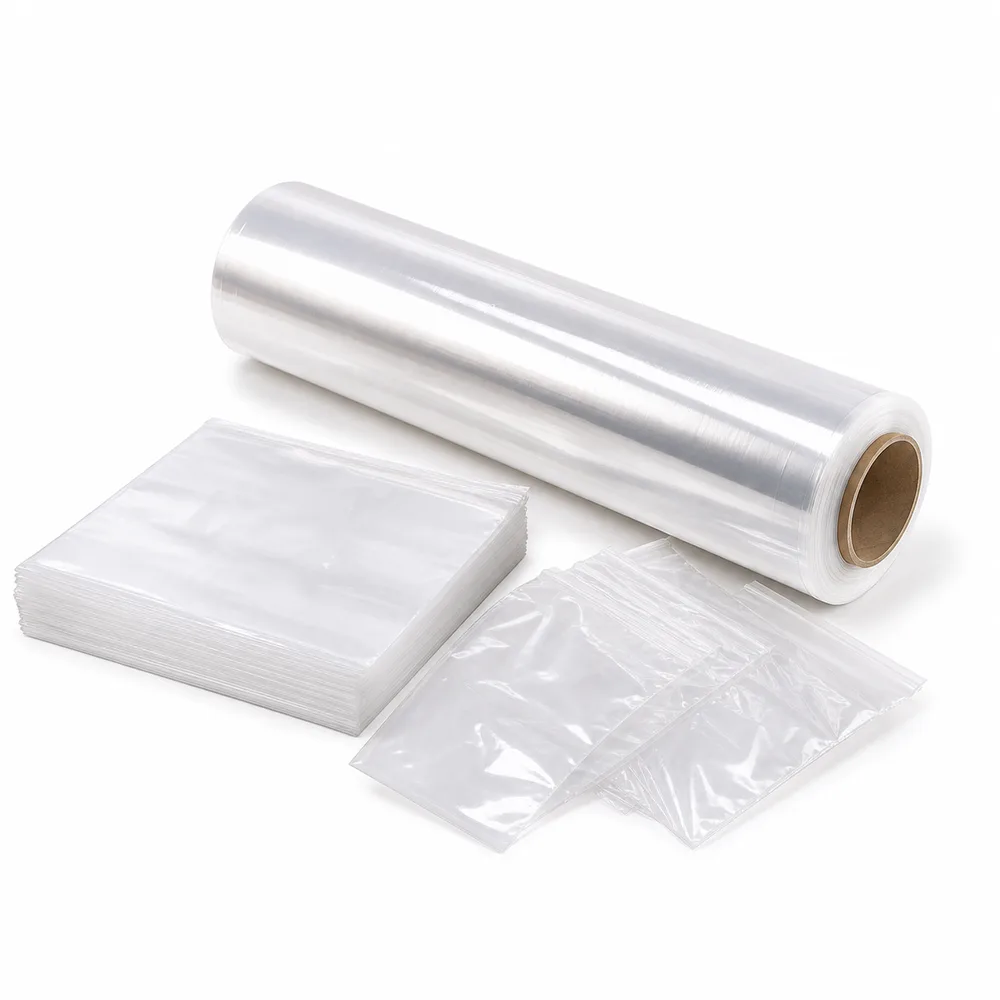
Custom Gauge PE Film
In category: PE Film
Specify custom PE film thickness with clear tolerance definitions, measurement agreement and a trial that evaluates the complete packaging process.
Include your destination, quantity and intended use for a focused sourcing review.
PE Products in this category are usually made of polyethylene (PE, LDPE, HDPE or LLDPE) and are not PVC.
Ordering polyethylene film at a custom gauge often begins with a number, but that number is not a complete specification. Nominal thickness, permitted variation, measurement procedure and package performance answer different questions. You may be trying to reduce material use, address a recurring puncture or improve a converting operation. Each objective needs a different investigation before a new gauge can be approved. This guide explains how to connect a thickness request with a useful acceptance process. It does not claim that an unidentified supplier can produce any particular gauge, tolerance or construction.
Write down the reason for changing thickness
If the pack fails at a component corner, identify the location, product geometry and stage at which failure occurs. If the objective is lower consumption, record current film use for a defined quantity of acceptable packages. If the film runs poorly through the machine, describe that operating problem separately from the package strength requirement. These details allow a technical response rather than an automatic suggestion to buy thicker film.
Keep the current material and a failed package where possible. Distinguish the objective from the proposed remedy: reducing seal rejects is an objective, while increasing gauge is one possible change to investigate. Ask suppliers to explain how their proposal addresses the problem. Do not approve a dimensional change merely because it seems intuitively stronger or less expensive.
Nominal gauge is not the same as every local reading
Nominal thickness is the target described in the specification. A measurement at one location does not necessarily represent the whole roll. Sample position across the web and along its length matters when assessing uniformity. Ask whether a report contains an average, recorded extremes or a small selection of readings. The distinction needs to be understood before figures from different proposals are compared.
Define what an agreed tolerance applies to: a local point, a specimen average, a roll average or another explicitly described criterion. Two parties can otherwise use the same percentage while applying different acceptance rules. State the measurement unit clearly, avoiding trade abbreviations that can have different meanings across markets. Record the definition beside the number rather than leaving it in informal correspondence.
Agree measurement before a disagreement occurs
Instrument conditions, specimen preparation and the surface being measured can matter when comparing results. The quality team should choose a suitable method and document its use, rather than relying only on the instrument name. State whether the reading concerns one film layer or the complete multilayer construction. A reading through a fold reported as single-layer thickness is an avoidable source of confusion.
Read the scope of a cited method. ASTM D6988 concerns thickness of test specimens used in calculating properties; its scope excludes commercial classification, quality-control thickness measurement and sampling. Citing it therefore does not create a commercial acceptance plan. A test procedure and an agreement on how to accept the delivered shipment are connected documents, but they are not interchangeable.
Understand what roll weight can and cannot establish
A heavier roll is not necessarily thicker. Width, length, core and supplied format all affect the comparison. Separate net film from the gross shipping unit. If quantities are calculated by area or length, define how tubing and folded film are counted. One party must not be calculating one visible face while the other counts the full opened area.
A mass-and-area estimate can be a useful cross-check, but it cannot replace local measurements and requires valid material information. If the estimate disagrees with the declared gauge, first check the calculation basis and core allowance. Do not infer a specific formulation or deliberate short delivery from that discrepancy alone. Resolve the question using identifiable samples and information that both parties can review.
Treat downgauging as a performance project
LyondellBasell's technical discussion of downgauged LLDPE considers required properties across different gauges. The procurement implication is straightforward: a material working at one thickness is not automatically approved at another. List the jobs performed by the current package and establish pass or fail criteria before evaluating a thinner proposal. Material reduction has to preserve the functions that actually matter to the application.
Avoid changing several unidentified variables simultaneously. If formulation or construction changes alongside gauge, record that openly rather than attributing the entire result to thickness. Follow the candidate through converting, filling, handling and opening. A theoretical reduction in film mass becomes useful only when the product reaches the required stage in an acceptable package. A failed pack can outweigh a small saving at purchase.
Evaluate machine operation and package use separately
A material can perform acceptably in a laboratory while needing different, approved operating conditions on a production line. Include unwinding, guiding, cutting and the relevant sealing operation in the custom-film trial. Equipment changes belong with authorised personnel working within the manufacturer's instructions. This guide does not prescribe universal heat or tension settings for a film whose construction and machine are unknown.
Keep the production result distinct from the package result. Fewer machine stops do not establish transport performance, and a sound pack made slowly during a short trial does not demonstrate stable production output. Record the operating conditions and the end-use assessment separately. That separation helps identify whether further investigation belongs with material selection, machine operation or package design.
Make the approved sample relevant to the order
A small sheet is useful for an initial inspection but cannot reveal every behaviour of a full roll. Choose trial quantity according to what must be evaluated and the equipment available. Ask for sample identity, dimensions and proposed construction. If the sample was made by a different production route, establish that limitation before assuming its result represents a commercial delivery.
Agree how rolls and measuring positions will be selected for shipment acceptance. Retained samples, identifiable roll labels and a named approval owner make later questions easier to investigate. Decide in advance how close-to-limit results or conflicting measurements will be reviewed. A rushed decision based on one reading should not replace a documented approach proportionate to the application risk.
Build a specification with more than a gauge column
Put the application, roll form, precisely defined width, target gauge, tolerance basis, required functions and acceptance method together. Printing, surface treatment, product contact and storage conditions can affect the proposal too. The respondent must confirm capability for the requested combination. The term custom is not evidence that every width, gauge, formulation and finishing requirement can be supplied together.
Compare usable net quantity, trial and production waste, converting cost and accepted package output. Ask for commercial minimums and preparation requirements in the actual quotation; do not assume them from catalogue wording. If a proposal changes formulation as well as gauge, show both changes in the revised specification. This prevents a later reorder from inadvertently reverting to the wrong material.
Use the enquiry to reach a technical decision
Send the existing application, specific problem, available sample information and objective of the change. Instead of requesting cheap custom film, explain which outcomes must remain and which constraints can be discussed. A useful response distinguishes proposed specifications from points requiring validation. A broad quality promise does not describe how the new film will be approved on your process.
After approval, control subsequent changes. Adjusted thickness, construction or width may require part of the evaluation to be repeated. Keep the specification revision consistent across the order and sample report. That simple discipline makes a repeat purchase the continuation of an agreed material definition, rather than another debate about what a number on an invoice was intended to mean.
Buyer questions
Is thicker film always the better choice?
No. Construction, material, local defects and application affect performance. Validate the relevant function and the completed package rather than deciding by thickness or hand feel alone.
What tolerance should be requested?
There is no universal value for every film. Agree it against application needs, confirmed production capability, measurement conditions and sampling basis. No unsupported numerical tolerance is assigned here.
Does net roll weight prove the gauge?
Not by itself. Width, length and material information are also needed, and an average estimate cannot establish the local profile or finished-pack performance.
Where should a material-reduction project begin?
Record current consumption and acceptable-package criteria. Then compare a traceable candidate with a defined trial. Simply lowering the gauge written on the order is not a complete optimisation.