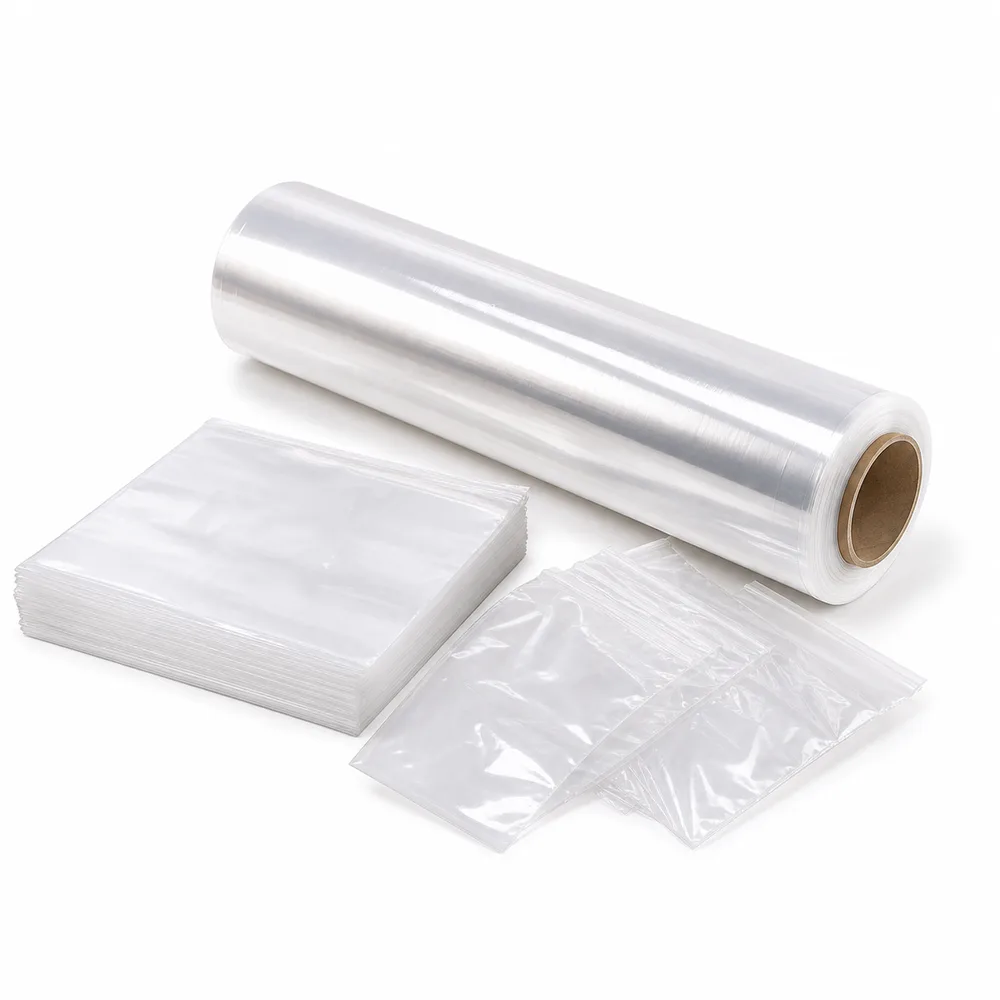
PE Film for Lamination and Packing
In category: PE Film
Specify polyethylene lamination film by layer function, treated face, adhesive compatibility, sealing behaviour and approval of the finished structure.
Include your destination, quantity and intended use for a focused sourcing review.
PE Products in this category are usually made of polyethylene (PE, LDPE, HDPE or LLDPE) and are not PVC.
Polyethylene film for lamination should be selected as part of a packaging structure, not as an isolated sheet that merely needs to stick to another surface. PE may form a sealing or product-facing layer, but its exact role must be defined in the construction. The result depends on the other web, adhesive, printing, converting conditions and final use. This guide helps purchasing and converting teams prepare a technically useful enquiry. No thermal capability, food-contact approval or special performance is established simply by calling the material lamination film.
Place the film in a complete layer drawing
Describe the structure from the outside of the pack towards its contents and assign a purpose to each layer. The PE film may be selected for sealing, flexibility or a combination of requirements. Do not assign the performance of the entire laminate to one component. For example, a defined oxygen or moisture protection requirement must be evaluated for the complete package and relevant conditions, not inferred from the word polyethylene.
Clarify whether the enquiry concerns base film only or a finished laminated roll. Those purchases have different approval responsibilities, documentation and delivery stages. If another factory will carry out the lamination, involve that converter in defining the input material and equipment constraints. Purchasing approval alone does not establish that the film is suitable for the proposed converting route.
Make both faces identifiable without guesswork
Identify the adhesive-facing side and the product-facing side unambiguously. Where one surface is prepared for bonding, the roll label, unwind drawing and layer diagram must agree. A note saying inside can be misunderstood if it does not distinguish the inside of the wound roll from the inside of the finished pack. This is a documentation problem worth resolving before the trial begins.
Use the same identification convention for samples and commercial rolls. Useful width, trim allowance, core and winding arrangement should suit lamination and subsequent slitting. If the web will be rewound more than once, follow its orientation through the complete sequence on paper. Detecting a reversed face before production is preferable to discovering it after consuming adhesive and an already printed partner film.
Treat surface preparation as a process control
Enercon describes corona treatment as a way to improve wetting and support adhesion. It also explains that measured surface energy does not itself guarantee a bond and that the treatment effect can change over time. Consequently, the phrase corona treated is incomplete without an identified side and an agreed approach to checking suitability when the film is converted.
Specify which information accompanies delivery and what the converter checks before use. The technical team should select the test method and any additional treatment in consultation with the relevant equipment and material guidance. Avoid adopting a universal surface-energy number for every adhesive and web. The appropriate operating requirement must be established within the actual combination being evaluated.
Choose the adhesive for the entire combination
A laminating adhesive cannot be selected independently of the films and end use. Bostik, for example, describes flexible-lamination adhesive families with differing chemistries and application needs. That range is not evidence that any adhesive bonds every film. Give the technical reviewer the exact adhesive identity, both substrates, the printing arrangement and the intended package use so that compatibility can be assessed specifically.
This page does not provide mixing instructions or a generic cure time. Those requirements must come from the identified adhesive system and validated process. If the film respondent also proposes an adhesive, clarify the scope of responsibility and evidence supporting the combination. An incomplete agreement can leave several parties discussing a bond problem without a shared definition of what was actually processed.
Evaluate sealing after the laminate is made
A PE film that seals satisfactorily on its own is not automatically approved in the finished structure. The partner layer and converting route change the package being evaluated. Test at the stage when the system is ready for conversion and assessment according to the applicable instructions. A visible seal line is only one observation; the package must also work during filling, handling and intended opening.
If the contents can reach the sealing area during filling, explain that requirement and agree an appropriate evaluation with the packaging specialist. Define the opening behaviour too. A seam intended to be cut with a tool is not the same objective as an easy-open seal. Neither function can be established merely from the term laminate or the thickness of its PE layer.
Report delamination, curl and blocking separately
When a converted roll has a problem, poor adhesion is not a complete description of every possible observation. Layers separating, a sheet curling, unwanted sticking between wound layers and uneven appearance are different issues. Record where and when each occurs. Did it appear immediately after lamination, after slitting, during storage or only when the package was sealed? The sequence guides the investigation.
Keep identified samples of incoming film and converted structure linked to the same trial. This allows the participating teams to discuss a known batch. Avoid changing several variables at random in the hope that the symptom disappears. The technical owner should review plausible causes and define the next evaluation. A successful short trial also needs confirmation under conditions representative of the intended order.
Assess food use at the finished-structure level
For food packaging, state the food, contact duration and temperature, and any process after filling. FDA guidance distinguishes food types and conditions of use, illustrating why a broad food-grade description is insufficient without an application scope. Request documentation tied to the actual materials and structure that will be ordered and converted, rather than an unrelated general declaration.
Reviewing the PE resin alone does not remove questions about adhesive, printing or the finished package. Ask the responsible compliance specialist to define the necessary assessment for the destination and intended use. Frozen storage, hot filling and specialised thermal processing are separate capabilities, not default properties of every lamination film. This guide frames sourcing questions; it does not certify an individual package.
Assign the decisions in a shared trial
Before sending samples, the buyer, film producer and converter should agree what the trial must establish. Identify who assesses appearance, layer bond, sealing and machine behaviour, and who authorises commercial production. Record film identity, construction, adhesive system and relevant timing in the trial report. Otherwise a promising result can become detached from the material and conditions that produced it.
Do not end the evaluation with a few empty pouches if the intended use requires more. Include the real contents and relevant use sequence where needed. Keep uncompleted checks explicitly open instead of describing the result as fully approved. This distinction matters when several companies participate, because acceptance of an incoming film and acceptance of a consumer-ready package are not the same decision.
Send an enquiry that a laminator can act on
Include the layer drawing, PE function, lamination equipment context, delivery form, surface requirement, sealing process and package use. If the adhesive or partner film has already been selected, share its identification and technical documentation with the reviewer. Separate quantity, destination and delivery basis from technical points that still require a trial. This lets a respondent state what is proposed and what remains unconfirmed.
For repeat orders, retain the specification revision and reference pack. Changing the partner film, adhesive, printing or use conditions may require review even when PE gauge remains unchanged. Evaluate recyclability claims for the whole construction and the relevant collection route. The presence of a polyethylene layer does not, by itself, establish an environmental claim for every component of the laminate.
Buyer questions
Is every clear PE film suitable for lamination?
No. Clarity does not establish surface readiness or adhesive compatibility. Evaluate the layer function, bonding face, process and finished construction for the specific proposed film.
Does a surface-energy reading guarantee adhesion?
No. It is a process-control observation, not complete approval of the laminate. Surface condition, adhesive, processing and assessment timing still need to be considered together.
Can the laminate be finally approved immediately after production?
The assessment timing must follow the identified adhesive system and validated instructions. There is no single waiting period appropriate for all laminates, and premature approval can miss relevant behaviour.
What should be retained as the reference?
Link film and adhesive identity, the structure drawing, specification revision and approved package. An unlabelled piece of film is insufficient for investigating later changes or disagreements.